Friday, May 27, 2016

Pig Dissection Lab

This lab was the most unique lab we have done throughout biology this year: we dissected a fetal pig in order to better understand its anatomy and physiology, as its systems are very similar to our own human systems in the body. We identified certain external structures, such as its wrists and shoulders, and pointed out their functions. In the digestive system, we were able to observe where the esophagus and the stomach were located, and we noticed the pancreas and liver as well. There were many differences in appearance between all of the organs, especially the large intestine and the small intestine. This helped us understand how food moves through the digestive system. We learned that the diaphragm separates the abdominal cavity from the thoracic cavity, and it puts pressure on the lungs which makes us breathe. We saw where the larynx, the trachea, and the lungs were located. We saw many veins and arteries in the circulatory system, and we saw the pig's four chambers of the heart. We also observed other organs, such as the spleen, the kidneys, and the thyroid gland. The dissection was very helpful in understanding really where everything was in the body and how the systems worked, and it was an enriching learning experience.


Here is our video tutorial of the pig dissection:


* The spleen has many different functions, but one of them is to filter blood in the immune system. 


Wednesday, May 25, 2016

20 Time Final Post


For my 20 time project, (See 20 Time Individual Reflection) I did a survey to measure people's awareness of certain risk factors for diabetes and heart disease. I particularly focused my survey on the South Asian population. My main product was the results/data and new information I collected after doing the survey. Below are the data in graphs of 2 sample questions out of the 30 total questions I asked. 

I asked people to rate their overall stress levels on a scale of 1-10. 

A question I asked about Triglycerides 

In order to share our findings during the process of the 20 time project, we gave a TED style talk to the class. Here is the video of my TED Talk:

The TED Talk was a really new and interesting experience for me. I had practiced beforehand and I felt that I gave a presentation that got across all the information that I wanted to share with the audience. However, my presentation was slightly overtime, and in general, while I was preparing for the talk, I found it to be a challenge to cut down all the information into 5 minutes. My public speaking skills and confidence to speak in public has definitely increased a lot through doing this TED talk. I can build on the 20 time project experience as well as the experience of transforming all the information into the most pieces to share with others. 


Monday, May 9, 2016

20 Time Individual Reflection

For my 20 time project, I chose to do a study that explores some of the risk factors and parameters that are important in diabetes, insulin resistance, and heart disease in South Asians. I created a survey and I gave it to a small sample of the community so that I could try and determine the common risk factors, and more importantly, the level of awareness in a sample of the South Asian community.

I formed my questionnaire after reading the book The South Asian Health Solution, which was my initial inspiration for doing this project. I was intrigued by the fact that South Asians are at higher risk for diabetes and heart disease, and I wondered why that was and wanted look further into it. My focus was for the study was to see how aware most people were, and also to determine the prevalent risk factors.

My first steps were to research the topic, and I started by reading about 3/4 of the book The South Asian Health Solution. I used this resource, along with a couple others, to create my survey. I am happy with the major risk factors that the survey addressed, and how I formulated it to specifically measure how aware people were.

I then sent it to roughly 20 people, and analyzed some of the trends and patterns I saw. If I had more time on the project, I definitely would increase my sample size significantly to make the study more accurate. I divided my time slightly unevenly between the research and actually administering the questionnaire, and this is something I would change could I do the project over again. However, I learnt a huge amount from all the research I did on the topic, as well as creating and looking at the results from the survey.

I would love to continue giving the survey to more people; the results are fascinating, and tell me a lot about the awareness of risk factors for diabetes and heart disease in my immediate community. An immediate goal for me would be to continue raising more awareness of this topic as well, and share what I learned from my research with others.


Wednesday, May 4, 2016

Unit 9 Reflection

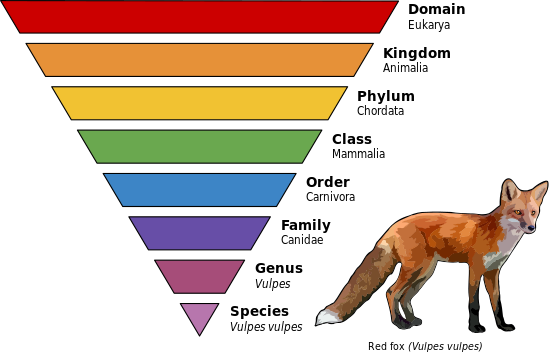
This unit was called "What on Earth Evolved", and we delved deeper into each kingdom and looked at the characteristics that define each group of organisms. Scientists have classified approximately 1.2 million species, but 8.7 million species are still unclassified. A Swedish botanist named Carolus Linneaus developed the 7 levels of organization that we use today; he formed scientific names in binomial nomenclature form. Phylogeny is the evolutionary history and relationships of species. A cladogram shows species' evolutionary relationships, and there is a common ancestor where branches meet. As we saw in Your Inner Fish, humans and fish have a common ancestor (See "My Inner Fish"). There are seven taxonomic levels: kingdom, phylum, class, order, family, genus, and species.

The 5 kingdoms within eukarya are: monera (prokaryotes), protista, plantae, fungi, and animalia. After the discovery of archae, which were found to be very genetically different from bacteria, the 3 Domain System was developed. The 3 Domains are Eukarya, Archaea, and Bacteria. Archaea challenge what we think of as required to live, and they live near hydrothermal vents, digestive tracts of animals, marshes, etc. In the bacteria kingdom, actinomycetes produce antibiotics, symbiotic bacteria live in guts to help with digestion (fix nitrogen), and cyanobacteria are photosynthetic.

We classify bacteria by their shape, cell wall composition, and the way that they obtain energy. Bacteria can be cocci, bacilli, and spirals. The gram stain has a crystal violet dye which will either bond with the peptidoglycan (gram-positive), or not (gram-negative). Bacteria can be chemoheterotrophs (bacteria which take in organic molecules), photoautotrophs (use light to convert H20 and CO2 into glucose), or chemoautotrophs (use energy from chemical reactions). They are very important in decomposition, and as nitrogen fixers. Viruses are not cells, but instead cores of DNA or RNA surrounded by a protein coat, or capsid. There are two types of viruses: lytic viruses and lysogenic viruses.

Fungi is a unique kingdom, with different characteristics from plants. Their cell walls are made of chitin, and they absorb their food through hyphae. Some types of fungi include sac fungi, club fungi (mushrooms), bread molds. Some of plants' major phyla are bryophyta (mosses), pterophyta (ferns), gymnosperms, angiosperms (flowering plants). Angiosperms can be monocots (have a single seed leaf), and dicots (have two seed leaves).

In animals, there are two types of symmetry: bilateral and radial. Some phylums of invertebrates are cnidaria, porifera (sponges), molluska. Arthropods, crustaceans, and insects are also invertebrates.
A sponge, part of the phylum Porifera

In the phylum chordata, which is mostly vertebrates, there are 7 classes of vertebrates: agnatha, condricthyes, osteicthyes, amphibia, and the amniotes reptilia, aves, and mammalia. Reptiles and amphibians have 3 chambers in their hearts, while birds and mammals have 4. They can be either ectothermic (cold-blooded) or endothermic (warm-blooded).


Here is my "What on Earth Evolved Presentation"


In this unit, we each chose an organism to present about and research in depth, and we had to give a 4-8 minute presentation to the class. I had researched the topic and practiced the presentation, so I felt as if I knew the subject well. Since I practiced before presenting, my nerves went away as soon as I started presenting, and I learned that this is a way to be more confident that works for me. In the future, I would include additional interesting facts and pictures as well.


Saturday, April 30, 2016

"My Inner Fish"

One of the main themes in the two episodes "Your Inner Fish" and "Your Inner Reptile" is that humans and fish have a shared ancestry, and humans and reptiles are actually closely related. There is a lot of concrete evidence in fossils and embryos to support this.

In the initial stages, a human embryo and and fish embryo look very similar because of the common Hox genes, which suggest common ancestry. Other evidence for common ancestry includes some structures that humans and fish both have today: bony skeletons, backbones and skulls, and shared basic brain anatomy.
The Sonic Hedgehog gene sends out the organizing signal; it tells cells to do different things, and creates the array of digits on the hand. Hair, which is a defining characteristic of mammals today, may have first evolved in our small mammalian ancestors as a sensory organ or a tool to help keep warm.

Another example of humans' relation to reptiles is their hearing anatomy. Mammals have an acute sense of hearing because they have 3 bones in their middle ear which form a lever system, while reptiles only have 1 bone in their middle ear. Scientists think that two jaw bones in reptiles got smaller, moved further up the jaw, and evolved to have a new purpose in the ear in mammals.


Human and fish embryos look very similar initially because of Hox genes, indicating a common ancestry


Monday, April 18, 2016

20 time update: Surveying

During the past couple weeks, I have finished creating my questionnaire that I am using to determine whether people are at risk for diabetes and heart disease. I have also interviewed 3 people using this questionnaire, and I think that it is proving reasonably effective.

My questionnaire originally contained quite specific numbers to determine whether a person was at risk for diabetes or heart disease. However, as I did my first interview, I realized that the majority of people don't know their exact test results, and at most they will remember whether it was in the low, normal, or high range. I shifted my questionnaire slightly to measure people's awareness of their own risk factors. I also used their answers of results being in the low, normal, or high range to determine their level of risk.

My next steps are to continue giving the questionnaire to more people; the more people I include in my study, the more accurate it will be.


Friday, April 15, 2016

Invertebrate of Your Choice: Jellyfish

Jellyfish are invertebrates, and belong to the phylum Cnidaria. They are the oldest existing animals that have specialized tissue. Jellyfish are medusas (non-polyps). They are part of the scyphozoans class of Cnidaria. Jellyfish are found in every ocean, and are about 500 to 700 million years old. Jellyfish are the oldest animal to have multiple organs. They cannot see, but some do have ocelli, which allows them to detect light. Jellyfish come in a very wide variety of sizes, which can range from 1 mm in height to about 2 meters in height. They don't have a central nervous system, a digestive system, a respiratory or a circulatory system. They obtain their oxygen instead by diffusion through their skin.

Source: Wikipedia

Moon jellyfish